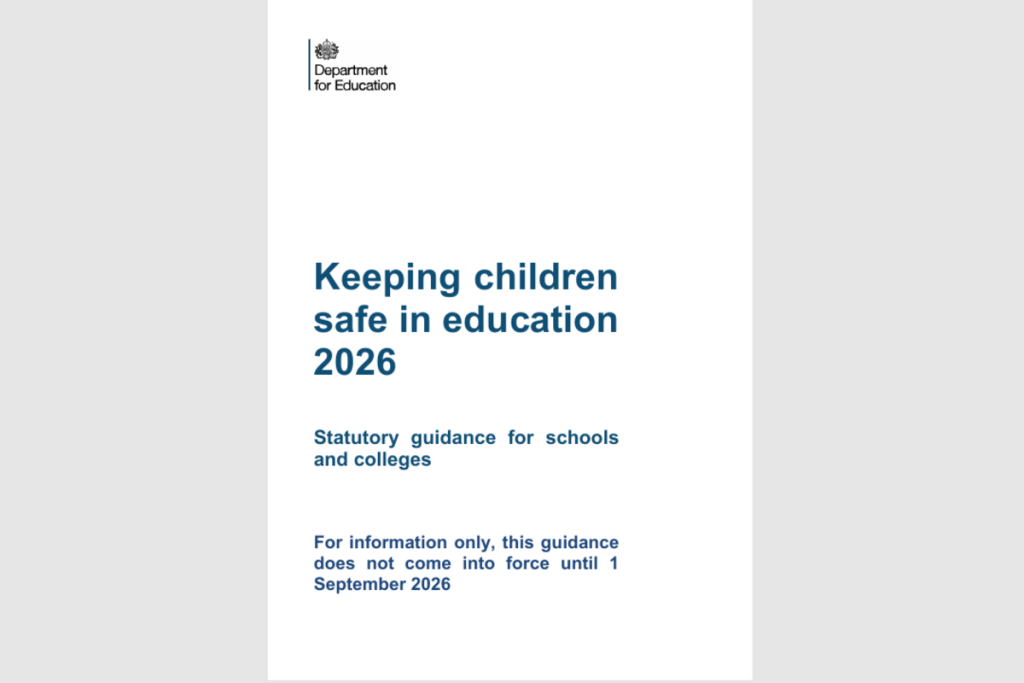
Keeping Children Safe In Education or KCSIE gives schools and colleges in England a clear, consistent framework for protecting children from harm.
The Good:
- sets out legal safeguarding duties
- child-protection procedures
- guidance on identifying and responding to abuse, neglect, exploitation, bullying, and other risks that should be addressed through staff training.
- regularly updated
- clear reporting procedures and ensures consistency through a national framework that all schools and colleges must follow
- schools must know, record and be able to refer to each child’s biological sex
- schools must not allow any child to use opposite sex toilets, changing rooms or dormitories on school trips.
- The term ‘gender identity’ is not mentioned once.
By putting the advice about use of single-sex facilities within KCSIE, the government has placed compliance within the remit of school inspections. The result will help to restrict activist teachers and unions promoting transgender transition as a right.
The Bad:
The guidance talks about children who have fully socially transitioned from an early age and may be living in stealth, that is, a school or college, friends/staff may be unaware of their biological sex. The idea that a child can be admitted to school “in stealth” as the opposite sex is not consistent with the legal requirement that all children’s sex must be correctly recorded wherever sex is recorded, e.g. in the admissions register and school information system.
KCSIE lets parents and students down because schools are still being left with the dangerous idea that they can facilitate ‘social transition’ – which remains undefined – and that they should negotiate this on a case-by-case basis. This can lead to pressure on the school by parents and teachers. This still allows for unrealistic expectations for both child and parents alike. KCSIE also says that schools should recognise that children’s best interests are paramount, and that this is not always the same as what the child wants.
What then is left for a ‘social transition’ plan or policy for a school? Pronouns? This too is ruled out by using the pupil’s name instead. Dr Hilary Cass’s expert review focused on clinical decision-making, and did not consider decision-making by schools, or other children’s rights and welfare. It cannot be the case that schools are being encouraged to take a “doctor knows best” approach, when doctors have been encouraging children and families to have unrealistic expectations of what can safely, reasonably and lawfully be accommodated by schools. The Cass Review stated that social transition is a significant psychological intervention and is not to be undertaken by unqualified professionals. No school has these qualified professionals.
Similarly, where schools have implemented single-sex sports as being necessary for safety reasons, there should be no exceptions and pupils must not be allowed to participate in sports designated for the opposite sex whatever the child’s social transition plan. The guidance says ‘Where there are no safety concerns…’ but this only considers that child’s involvement in the sport. What about the other children? It is difficult enough to get girls involved in sports in school in the first place. Why bring up a barrier of having a child of the opposite sex forced on them?
Consideration must also be made with respect to SEND students. There should be an additional safeguarding challenge for these students of gender identity/claiming a cross-sex identity.
KCSIE must also be considered in relation to the new EHRC Guidance for Schools. Here, discrimination is only a consideration if the child has undergone gender reassignment surgery. Thus, it is not discriminatory for a school to restrict a pupil who has not undergone this surgery from not playing in their opposite sex team. Further, even having undergone such surgery, it is not discriminatory for the school to provide alternative private changing facilities away from the pupils preferred facility.
The National Education Union is already encouraging members to consult trans organisations on how to support these students. This repeats the same mistake that businesses and organisations made with respect to the Equality Act 2010 by contacting Stonewall etc. Since KCSIE is now part of inspections, Head Teachers must consider any legal ramifications of allowing these pro-trans or activist organisations anywhere near their school. This guidance firmly rules out the involvement of these organisations.
To view KCSIE 2026 click here Keeping children safe in education 2026 (comes into force from 1 September 2026)